Flower Care Myths UK Florists Want You to Stop Believing
Posted on 10/10/2026
If you have ever brought home a gorgeous bouquet, popped it in a vase, and then wondered why it looked tired two days later, you are definitely not alone. Flower Care Myths UK Florists Want You to Stop Believing are everywhere - from old family advice to well-meaning internet tips that sound sensible but do more harm than good. In real floristry, freshness is less about magic tricks and more about simple, consistent care. The good news? Once you stop following the myths, flowers usually last better, smell fresher, and look like they were just delivered that morning. Which, ideally, they should.
Below, we unpack the most common flower-care misconceptions florists hear across the UK, explain what actually works, and show you how to care for everything from mixed bouquets to more delicate stems. Whether you buy flowers for your kitchen table, a gift, or a special occasion, this guide will save you time, reduce waste, and help you get far more from every bunch.
- Why Flower Care Myths Matter
- How Proper Flower Care Actually Works
- Key Benefits and Practical Advantages
- Who This Is For and When It Makes Sense
- Step-by-Step Guidance
- Expert Tips for Better Results
- Common Mistakes to Avoid
- Tools, Resources and Recommendations
- Law, Compliance, Standards, or Best Practice
- Options, Methods, or Comparison Table
- Case Study or Real-World Example
- Practical Checklist
- Conclusion
- Frequently Asked Questions
Why Flower Care Myths UK Florists Want You to Stop Believing Matters
Flower care sounds simple until you start hearing contradictory advice. Cut the stems under hot water. No, cold water. Add sugar. No, don't. Keep them by the fruit bowl. Actually, don't. Let's face it, for something as familiar as a bouquet, flowers attract a surprising amount of folklore.
For florists, these myths matter because they often shorten vase life, damage blooms, or create expectations that no fresh flower arrangement can realistically meet. A bouquet is not a houseplant, and it is not a science experiment either. It needs clean water, sensible trimming, and a decent environment. That's the core of it.
There is also a cost angle. In the UK, flowers are often bought for birthdays, anniversaries, sympathy moments, weddings, and everyday pick-me-ups. If a bunch fades too quickly because the care advice was wrong, that is frustrating for the buyer and wasteful for the household. If you have ever paid for a beautiful arrangement and watched it collapse by Thursday morning, you will know the feeling.
Florists want these myths challenged because good flower care is about respecting the product. Fresh stems are living material. They drink, breathe, and respond to heat, bacteria, and handling. Treat them well and they usually reward you. Treat them badly and they look sulky fast. A bit like us before coffee, frankly.
How Flower Care Myths UK Florists Want You to Stop Believing Works
The reason myths spread is easy to understand: flowers look delicate, so people assume complicated fixes are needed. In reality, most successful flower care comes down to three things: water quality, stem preparation, and room conditions.
Fresh flowers continue to absorb water through cut stems. If the stem ends are blocked by old sap, crushed tissue, or bacteria, hydration drops and the bloom starts to droop. That is why florists cut stems cleanly, often at a slight angle, and remove lower leaves before arranging. It is not fussy. It is basic mechanics.
Myths become a problem when they disrupt those basics. For example, putting flowers in direct sunlight because "plants like sun" ignores the fact that cut flowers are already under stress. Another common mistake is adding random kitchen ingredients to the vase. Some do nothing. Some make the water grim faster. A vase should smell fresh, not like a science cupboard on a rainy Tuesday.
There is also a flower-specific element. Different blooms behave differently. Roses, lilies, chrysanthemums, carnations, tulips, and hydrangeas each have their own quirks. A florist working with roses will not necessarily advise exactly the same routine they would use for chrysanthemums or tulips. That is why one-size-fits-all myth advice so often falls short.
One more thing: flower care is about prevention, not rescue. Once bacteria has built up and petals have started collapsing, no trick can fully reverse that. Better to start right. Much better.
Key Benefits and Practical Advantages
Stopping these myths does more than make you feel clever for five minutes. It genuinely improves how your flowers perform.
- Longer vase life: Clean water and sensible stem care help blooms stay fresher for longer.
- Better appearance: Stems stand taller, petals open more evenly, and arrangements hold their shape.
- Less waste: You throw away fewer flowers, which matters whether you buy weekly bouquets or occasional gifts.
- Better value for money: A well-cared-for arrangement gives you more days of enjoyment per pound spent.
- Less stress: You do not have to keep guessing which online tip to trust.
There is a quieter benefit too. Good flower care changes the way a room feels. A fresh arrangement on the sideboard or kitchen table can make a whole home seem tidier and calmer. In winter, especially, that tiny bit of softness matters. In summer, it can lift a room that has been sitting warm and still all afternoon.
For gift buyers, this also protects the gesture itself. If you send flowers for a birthday or sympathy message, you want them to arrive looking thoughtful and continue looking cared for. That is why many people choose reliable seasonal options like best sellers or any occasion flowers when they want something safe and versatile.
Who This Is For and When It Makes Sense
This guide is for anyone who buys, receives, arranges, or gives flowers and wants them to last properly. Simple as that.
It is especially useful if you:
- buy bouquets regularly for the home
- send gifts for birthdays, anniversaries, or thank-you moments
- manage flowers for weddings or events
- order sympathy or funeral flowers and want them handled respectfully
- have been told conflicting care advice by friends, family, or social media
If you are choosing flowers for a special occasion, care matters even more. A bunch meant for a birthday can be enjoyed over several days, while a wedding bouquet may need to hold shape through transport, photos, and a full day of wear. Different uses, different expectations.
It also makes sense if you are working to a budget. You do not need expensive arrangements to get good results. A thoughtfully handled bouquet of cheap flowers can look lovely if it is trimmed and placed correctly. You really can make modest flowers go further. Truth be told, that is where practical care often shows its biggest return.
Step-by-Step Guidance
If you only remember one thing from this article, make it this: flower care works best when you do the basics consistently. Here is the florist-style version.
- Start with a clean vase. Wash it properly with hot soapy water. Any leftover bacteria gives fresh stems a bad start.
- Use fresh, cool water. Fill the vase with clean water at a level suitable for the stems. Too shallow and they struggle; too deep and lower leaves often rot.
- Remove leaves below the waterline. This is one of the easiest ways to reduce bacterial growth.
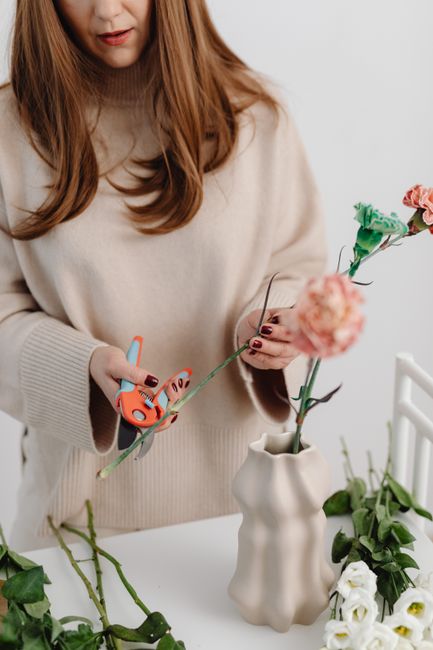
- Cut the stems. Trim each stem by a small amount with a sharp knife or clean scissors. Cut at an angle where possible.
- Arrange promptly. Don't leave stems drying out on the side while you answer messages or make tea.
- Place the bouquet away from heat and fruit. Keep it out of direct sun, away from radiators, and away from ripening fruit.
- Refresh the water regularly. Every day or two is ideal, depending on the flowers and room conditions.
- Re-trim if needed. If the stems look blocked or slimy, a light recut can help.
That is the practical core. No drama. No odd additives. Just decent handling.
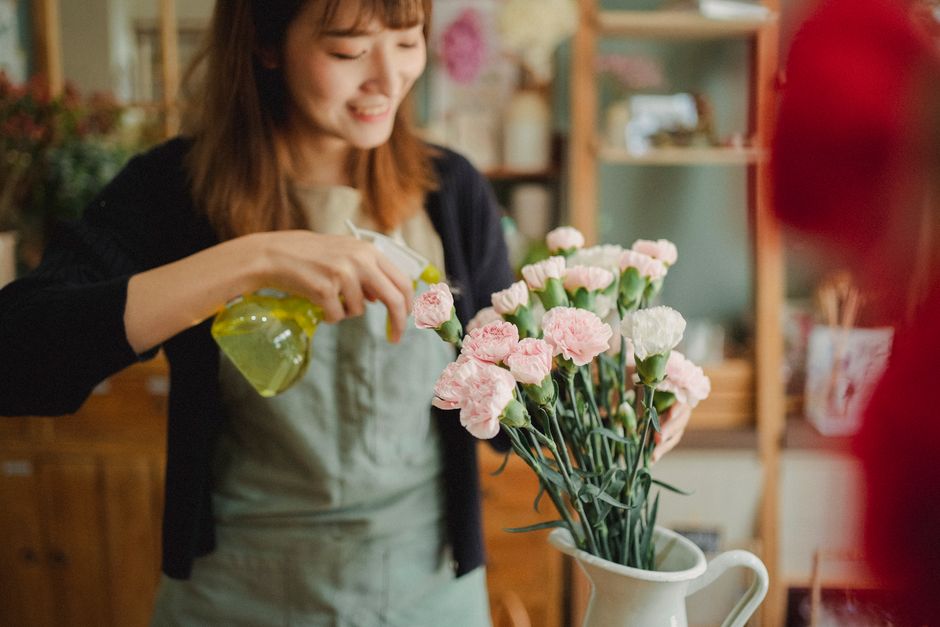
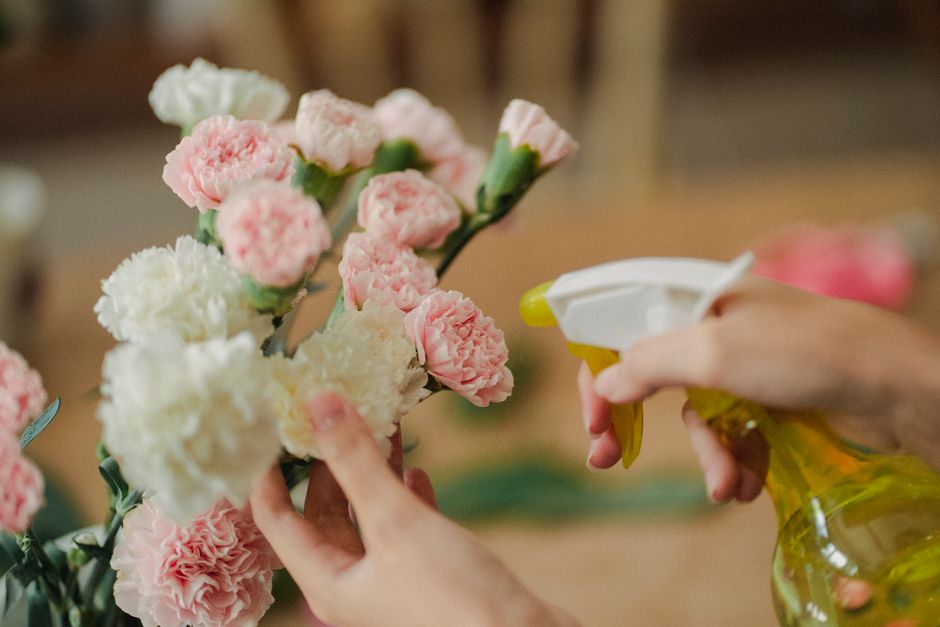
With more delicate stems, like hydrangeas, the goal is often hydration first and everything else second. If you are buying hydrengeas, for example, they may need a bit more attention than sturdy carnations. On the other hand, robust blooms like carnations are usually forgiving and can cope well with straightforward vase care.
Expert Tips for Better Results
Florists tend to pick up little habits that make a big difference. Nothing theatrical. Just the sort of practical know-how that comes from working with flowers day after day.
- Keep flowers cool on arrival. If they are delivered while you are out, bring them in and unwrap them as soon as you can.
- Change water before it looks cloudy. Clear water is a good sign, but not a guarantee. If the stems feel slimy, act sooner.
- Group flowers by behaviour when needed. Some flowers drink more heavily than others. If one stem variety goes soft quickly, separate it into its own vase if practical.
- Watch for pollen, droop, and scent. Heavy fragrance and open blooms can signal the arrangement is entering a later stage. Enjoy it, but know where it is in its life cycle.
- Use room temperature judgement. Cool rooms usually help longevity. A sunny conservatory in August? Beautiful for people, not always kind to cut stems.
One small florist habit I like: turning the vase slightly each day so the blooms face the room more evenly. It sounds trivial. It is trivial, perhaps. But it can make an arrangement feel full for longer.
Also, don't over-handle petals. Flowers are not upholstery cushions. A little care goes a long way.
Common Mistakes to Avoid
The biggest myth-driven mistakes are usually the easiest ones to fix. That is the encouraging part.
- Using dirty vases: This encourages bacteria and shortens vase life.
- Leaving foliage in water: Leaves below the waterline break down quickly.
- Putting flowers near fruit: Ripening fruit can speed up ageing in some flowers.
- Overfilling the vase: Too much water can make stems wobble and leaves sit in the water.
- Expecting all flowers to behave the same: A tulip and a rose are not the same customer, so to speak.
- Using too much "home remedy" additive: More is not better. It often just confuses the water chemistry.
One very common issue is people leaving a bouquet in its wrapper for too long because it looks neat and "protected". But packaging is only for transport. Once home, stems usually need air, water, and a proper vase. A wrapped bouquet on a sideboard can look like it is waiting for permission to become flowers again.
Another mistake is being too rough during a trim. A blunt pair of scissors can squash the stem ends. That tiny crush is enough to block uptake. It is annoying, yes, but avoidable.
Tools, Resources and Recommendations
You do not need a professional florist's bench to care for flowers well, but a few simple tools make life easier.
| Tool or Item | Why It Helps | Best For |
|---|---|---|
| Clean vase | Reduces bacterial build-up | All cut flowers |
| Sharp scissors or floral knife | Makes cleaner cuts on stems | Most bouquets |
| Fresh water | Keeps stems hydrated | All arrangements |
| Flower food packet | Supports hydration and cleanliness when used as directed | Mixed bouquets and gift flowers |
| Small jug | Makes water changes tidier and faster | Home care routines |
If you are buying flowers for a specific moment, it can help to choose an arrangement style that matches your needs. A ready-made vase arrangement, such as flowers in a vase, is handy when you want minimal handling. Seasonal collections like summer flowers or a classic mixed choice such as mixed colours also make care a bit easier because they are designed to look balanced from the start.
If you want something with a more premium feel, a luxury flowers selection can be a sensible pick when presentation matters and you are willing to give the bouquet a little more attention at home. For people who like a florist's judgement built in, a florist choice option can be a good shout. The team picks what is freshest on the day, which is often more useful than chasing a specific stem at the wrong time of year.
Law, Compliance, Standards, or Best Practice
For everyday home flower care, there is no special legal requirement you need to worry about. Still, there are sensible best practices that matter in the UK flower trade, especially for businesses handling customer orders, event flowers, or delivery arrangements.
Florists generally work to good hygiene standards, proper handling, and clear communication about care expectations. That means using clean tools, keeping water fresh, storing flowers sensibly, and giving practical advice that does not overpromise. If a florist tells you flowers will last forever, well, that is the time to raise an eyebrow.
For wedding work, sympathy tributes, and event flowers, there is also a duty of care around presentation, timing, and suitability. For example, funeral and memorial flowers should be prepared with respect and delivered in a condition appropriate for the occasion. That is why products such as sympathy flowers and wreaths are usually handled with extra attention to structure and finish.
If you are a business customer or arranging flowers for an important event, good practice also includes checking delivery timing, weather impact, and venue access. A bouquet can look perfect in the shop and still suffer if it spends too long in a hot van or by a radiator in the reception area. Not glamorous, but true.
Options, Methods, or Comparison Table
Sometimes the easiest way to understand flower care is to compare the approaches side by side. Here's a simple view of common methods.
| Approach | What People Think | What Usually Works Better | When to Use It |
|---|---|---|---|
| Myth-based home remedies | They extend life dramatically | Often inconsistent or ineffective | Rarely, if ever |
| Plain water and clean vase care | Too basic to matter | Usually the most reliable routine | Everyday bouquets |
| Flower food plus clean handling | Only for florists | Helpful when used properly | Gift bouquets, event flowers |
| Re-trimming and water changes | Unnecessary fuss | Very useful for freshness | Most cut flowers |
The plain truth is that the boring method often wins. Clean vase, fresh water, sensible placement. That's the winning trio. Fancy tricks are usually just noise.
Case Study or Real-World Example
Here's a realistic example from everyday floristry. A customer receives a mixed bouquet on a Friday afternoon. They love it, take a few photos, and then leave it wrapped on the dining table overnight because the packaging looks tidy. By Saturday morning, the leaves below the wrap have softened and the stems have dried slightly. Nothing catastrophic, but the bouquet has already lost a bit of energy.
Now compare that with the same bouquet being unwrapped, trimmed, and placed in a clean vase within half an hour of delivery. Lower foliage removed. Water changed on Sunday. Vase kept away from the kitchen radiator. By Monday, the bouquet still has shape, colour, and that fresh-cut scent that makes a room feel cared for. Different outcome, same flowers.
We see this sort of thing with gift flowers all the time. It is rarely about the flowers being "bad". More often, they are simply handled in a way that works against them. Once you know that, it becomes easier to get better results without spending more.
For a thoughtful gift, many customers choose a dependable bouquet style like thank-you flowers, birthday flowers, or romance flowers because they arrive with clear intent and a strong visual impact. The care still matters, of course, but the starting point is already stronger.
Practical Checklist
Use this quick checklist each time you bring flowers home. It is short on purpose.
- Wash the vase before use
- Remove packaging when the bouquet is home
- Trim the stems with a clean, sharp tool
- Take off leaves below the waterline
- Fill with fresh water
- Keep flowers away from heat, fruit, and direct sun
- Check the water daily
- Change the water before it turns cloudy
- Re-trim stems if they start looking blocked
- Enjoy the bouquet properly, because that part matters too
Quick expert summary: most flower care myths fail because they distract from the fundamentals. Clean water, clean tools, a good trim, and the right room conditions will do more for your flowers than almost any kitchen remedy ever will.
If you are buying flowers for regular home use, seasonal gifting, or a special occasion, start with a reliable selection and then care for it properly. That mix does the job far better than chasing clever hacks. Honestly, it saves a lot of faffing about.
Get a free quote today and see how much you can save.
Conclusion
Flower care does not need to be complicated, and that is the whole point. The myths are often more dramatic than the reality. Once you strip those away, you are left with a surprisingly simple routine that works: clean vase, fresh water, sensible trimming, and a good spot in the room.
That is why so many UK florists want people to stop believing the usual flower-care folklore. Not because they are being fussy, but because they know what actually helps. And if you have ever seen a bouquet hold itself beautifully for a week because someone got the basics right, you will understand why that advice matters.
So next time a bouquet arrives, take a breath, ignore the noisy myths, and give the flowers the simple care they really want. They will usually repay you with colour, fragrance, and a little lift in the room. Not bad for a vase of stems, really.
Frequently Asked Questions
Should I cut flower stems before putting them in water?
Yes. A fresh cut helps the stems take up water more effectively. Use a clean, sharp tool and trim a small amount from the bottom of each stem before arranging.
Is warm water better than cold water for cut flowers?
Not usually. For most home arrangements, fresh cool or room-temperature water is the safest everyday choice. Very hot water can damage delicate stems, and very cold water is not necessary for routine care.
Do flowers really need flower food?
Flower food can help when used correctly because it supports hydration and reduces bacterial growth. It is useful, but it is not a substitute for a clean vase and proper stem care.
Why do my flowers droop so quickly?
Common reasons include dirty water, blocked stems, leaves sitting in the vase water, warm room conditions, or leaving the bouquet unwrapped for too long after delivery. Sometimes it is a mix of several small issues.
Can I add sugar, bleach, or lemonade to the vase?
Some home remedies are popular, but they are not consistently reliable. Small amounts of certain additives may seem to help in theory, yet they can also cause problems if used badly. Clean water and proper flower food are safer choices.
Should flowers be kept in the fridge overnight?
Unless you know the flowers tolerate it and the fridge is suitable, it is usually unnecessary for home care. A cool room away from direct sun and heat is enough for most bouquets.
How often should I change the water?
Every day or two is a good rule for most arrangements. If the water becomes cloudy, smells off, or looks slimy sooner, change it immediately.
Do all flowers need the same care?
No. Sturdy blooms, delicate stems, and vase arrangements all behave differently. Roses, tulips, hydrangeas, lilies, and chrysanthemums each have their own quirks, so it helps to watch how the specific flowers respond.
Can I keep flowers near fruit or in direct sunlight?
It is better not to. Ripening fruit can shorten vase life for some flowers, and direct sunlight or heat will usually speed up fading. A bright room is fine; a hot windowsill usually is not.
Are supermarket flowers and florist flowers cared for differently?
The basic care is much the same once the flowers are home. Florist flowers may arrive in a more tailored arrangement or with fresher handling, but they still need a clean vase, fresh water, and sensible placement.
What is the biggest flower care myth in the UK?
Probably the idea that there is one clever trick that keeps flowers fresh for ages. In reality, consistent basics matter much more than any single shortcut.
When should I choose a ready-made arrangement instead of loose flowers?
If you want convenience, a cleaner presentation, or less handling at home, a vase arrangement can be a smart choice. It is especially handy for gifts, busy households, and occasions where you want the flowers to look right straight away.